Custom ERP software
Built around your processes.
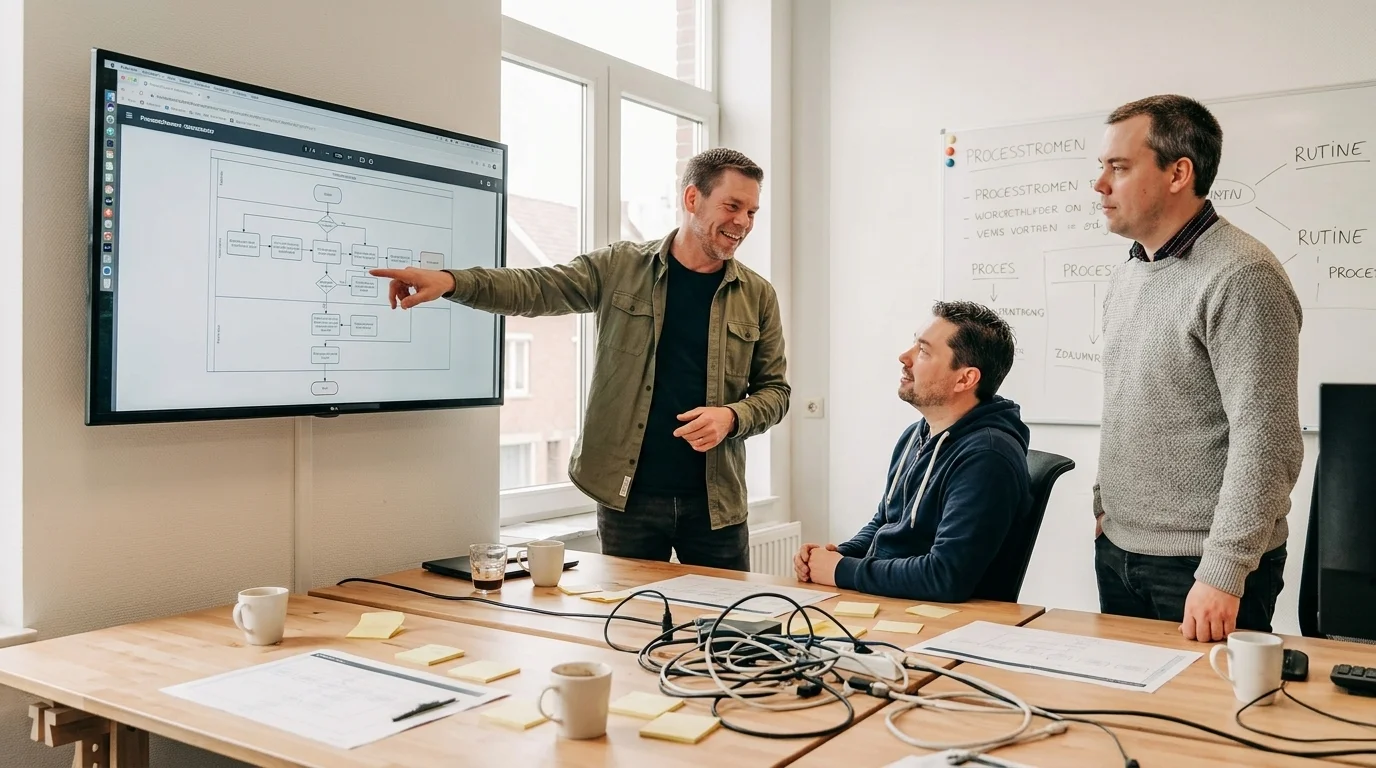
Off-the-shelf ERP packages work well for many businesses. But when your processes do not fit a standard template, we build the custom ERP software that does work. No unnecessary features, no workarounds. A system that seamlessly aligns with how you work, with smart AI integrations you will not find in standard packages.
From separate systems to a central platform
Everything in one system
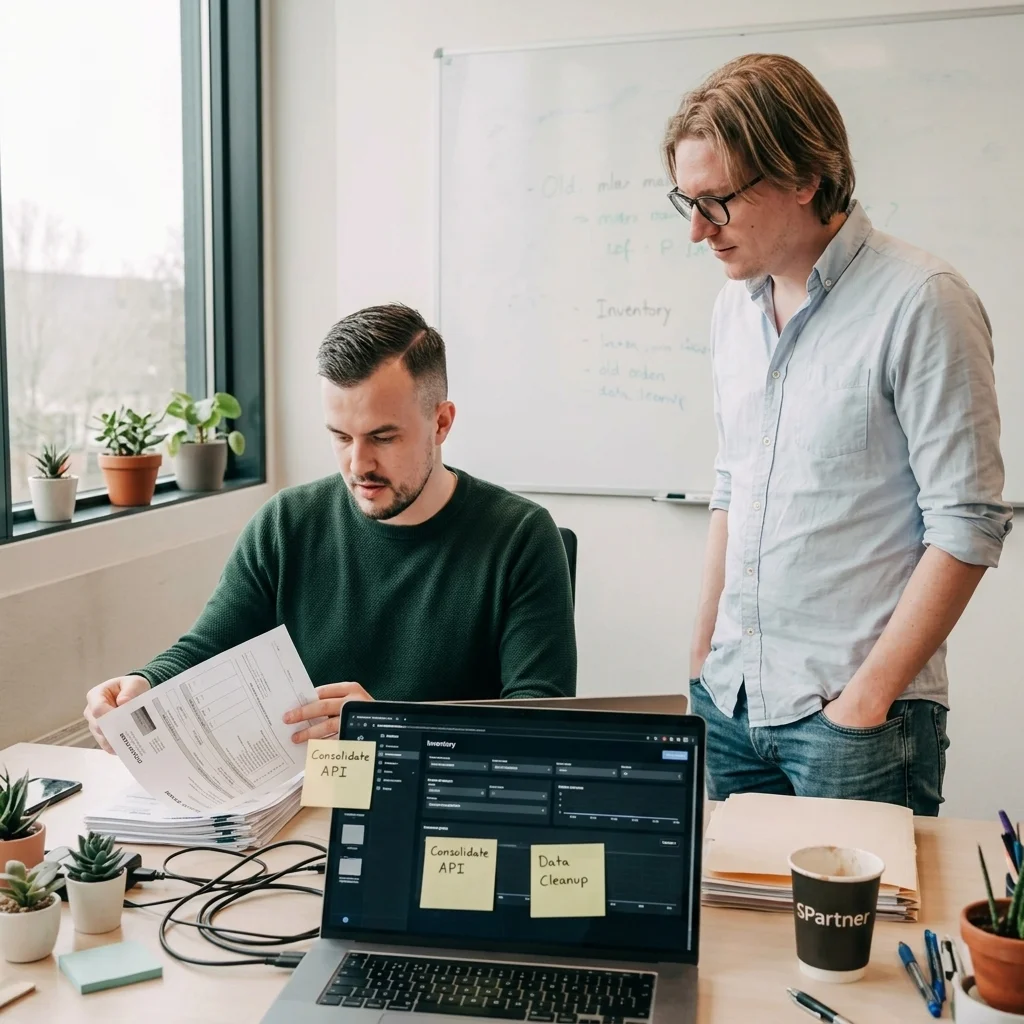
ERP stands for Enterprise Resource Planning. It is software that brings all business processes together in a central system: from procurement and sales to inventory management, financial administration and HR. Instead of separate spreadsheets, standalone accounting packages and personal lists, everyone works in the same environment with the same up-to-date data.
For many SMEs, a standard ERP package suffices. But as soon as your business processes deviate from the standard, you run into limitations. Complex pricing calculations, industry-specific workflows or integrations with legacy systems do not always fit into a standard package. That is when custom ERP software is the logical step.
With custom ERP, the system is built around your processes, not the other way around. No modules you do not use, no workarounds for features that do not quite fit. A system that does what your business needs, the way you work.
Benefits of custom ERP
Why SMEs choose bespoke solutions
Fits your processes
No compromises. The system is built around your way of working: from order processing to invoicing, exactly how you do it. Unique workflows, industry-specific rules and exceptions become part of the system.
Seamless integrations
Custom ERP integrates with your existing systems: accounting, CRM, webshop, warehouse software or legacy applications. Via API connections, data flows automatically between systems without manual re-entry.
Scalable and flexible
As your business grows, the system grows with it. New modules, additional users or extra integrations are added when you need them. No expensive licence upgrades to packages with features you do not use.
No licence fees
With standard ERP, you pay per user per month. With custom ERP, you own the software. No rising licence costs as you grow, no dependency on a vendor's price changes.

Standard or custom: making the right choice
When standard ERP falls short
Standard ERP packages are a good choice for businesses with common processes. But in these situations, it pays to have custom ERP software developed:
Unique business processes: Your way of working deviates from the standard. Complex pricing calculations, specific approval flows or industry-specific logic that no standard package supports.
Complex integrations: You work with proprietary software, legacy systems or industry-specific applications that do not connect to standard packages out of the box.
Growing SME: You are growing faster than the standard package can keep up with. Licence costs rise, but the functionality no longer matches the scale of your operation.
Competitive advantage: Your processes are a differentiating factor. With custom ERP, you protect that edge instead of using the same software as your competitors.
AI capabilities: You want to go beyond recording and reporting. With AI in your ERP, you can predict demand, automatically process orders and detect anomalies.
Recognise one or more of these situations? Then a conversation about custom ERP is worth your time.
What we build
Modules and applications of custom ERP
Inventory and logistics
Real-time inventory overview across multiple locations, automatic reordering, batch tracking and warehouse management. For wholesale businesses including location management and pick-pack-ship workflows.
Procurement and sales
From quotation to invoice in one continuous process. Automatic order processing, procurement suggestions based on sales data, supplier portals and EDI connections with supply chain partners.
Financial administration
Integrated accounting with automatic journal entries, VAT returns, debtor management and connection with your accountant. Or integration with an existing accounting package if you are happy with it.
Reporting and BI
Dashboards providing real-time insight into revenue, margins, inventory and KPIs. Custom reports for management, procurement or sales. With AI support for trend analysis and forecasting.


ERP with AI: smarter than just recording.
Standard ERP records what has happened. Custom ERP with AI predicts what will happen. Automatic order processing, smart procurement suggestions based on seasonal patterns, anomaly detection in financial data and AI-driven customer segmentation. Spartner combines years of ERP development experience with deep AI expertise. That makes us unique in the market.
Our approach.
From first conversation to working ERP system: this is how we approach it.

Step 1: Process analysis.
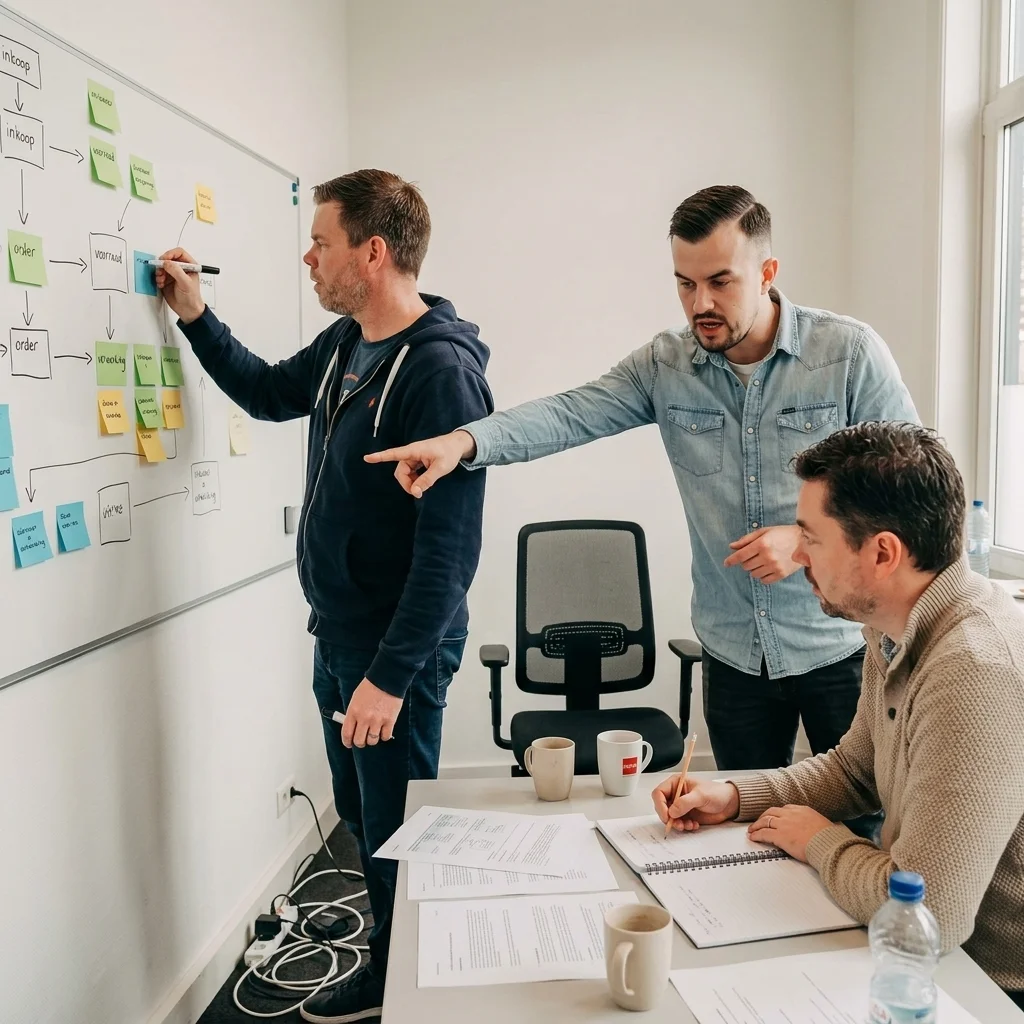
We start with understanding. How do you currently work? Which processes take the most time? Where are the bottlenecks and where does information get lost? We map the current situation and translate it into functional requirements for the ERP system.

Step 2: Design and architecture.
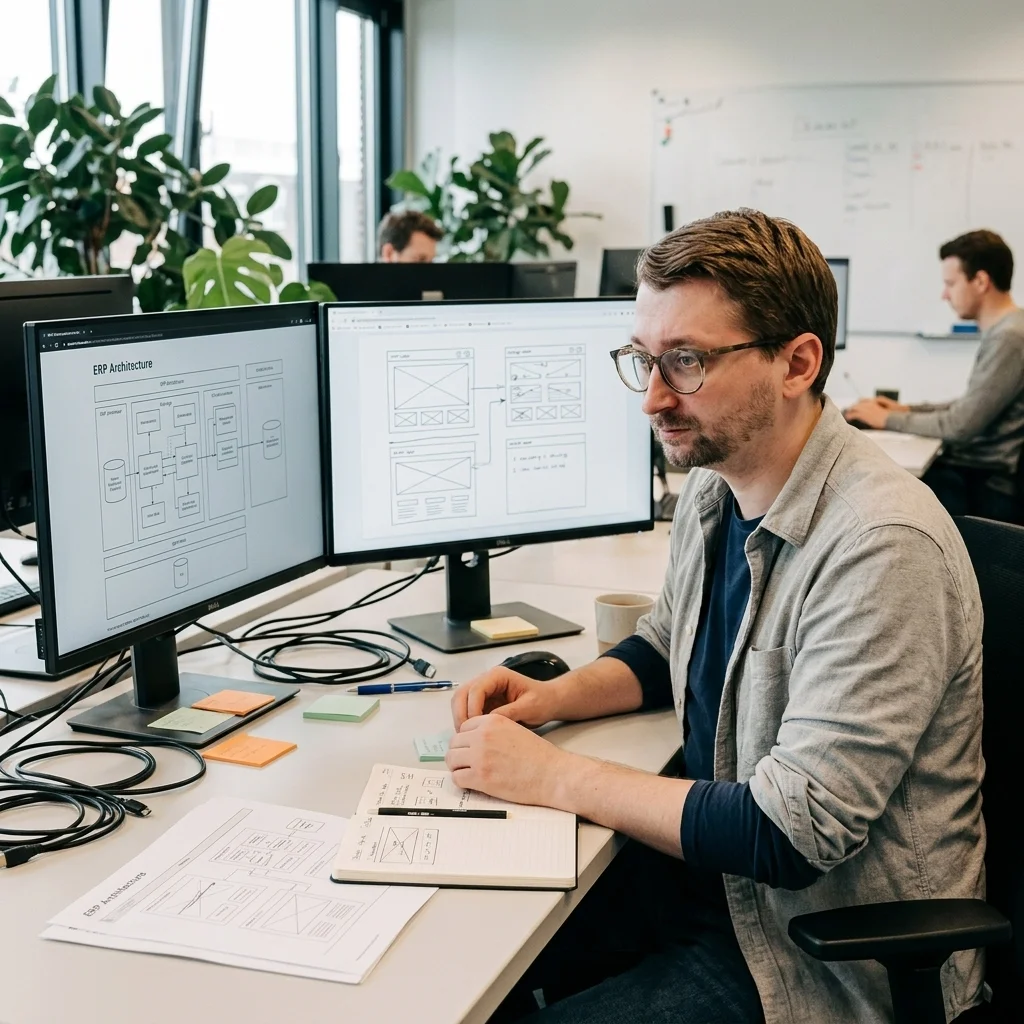
Based on the analysis, we design the application architecture: which modules, how they interact, which integrations are needed and how data flows. You see the design and provide feedback before we start building.

Step 3: Development and integration.
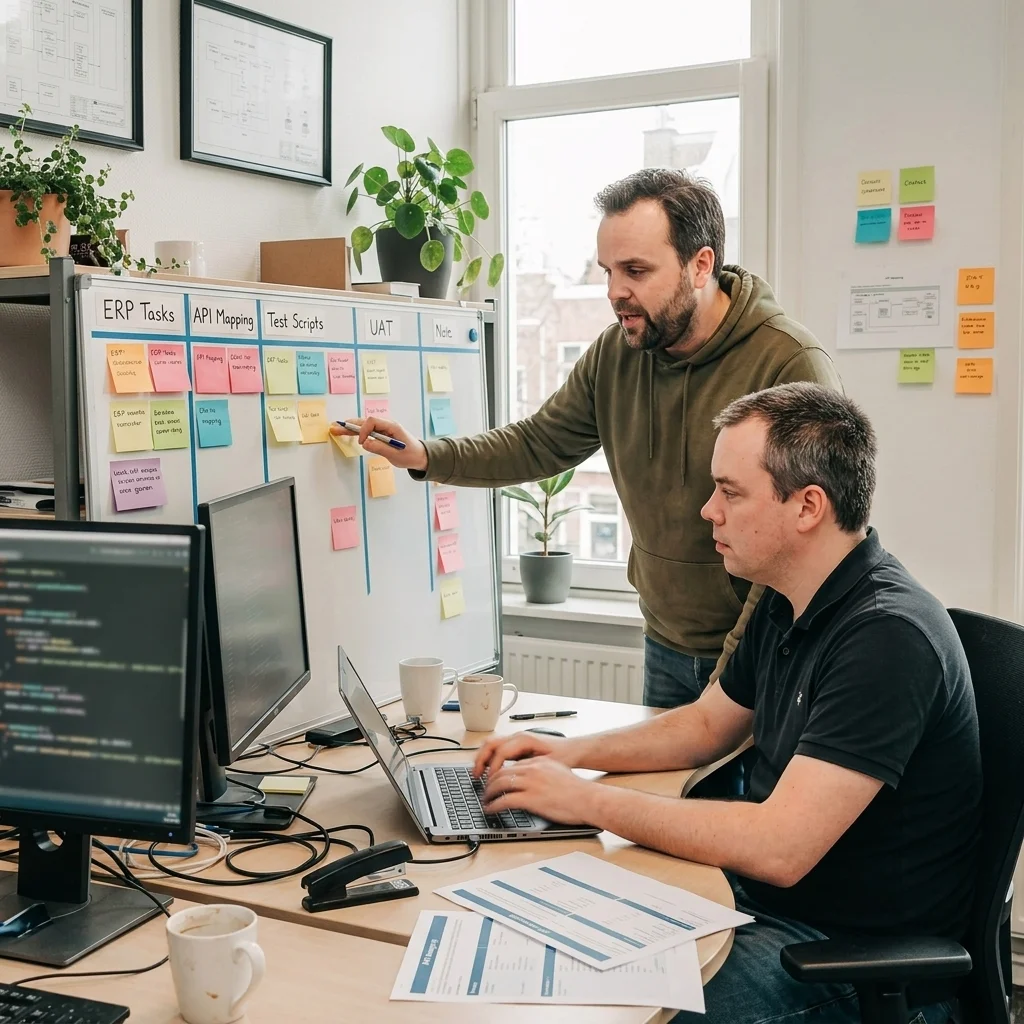
We build the system in two-week sprints. After each sprint, we demonstrate working software and process feedback. Integrations with existing systems, API connections and data migration are handled in parallel.


Step 4: Implementation and training.
We roll out the system in phases, train your team and guide the transition from old to new. After go-live, we provide ongoing support and continue developing the system based on your evolving needs.
Industry-specific ERP solutions
Custom ERP by sector
Every industry has its own processes and requirements. We build custom ERP software for industries including:
Wholesale and distribution
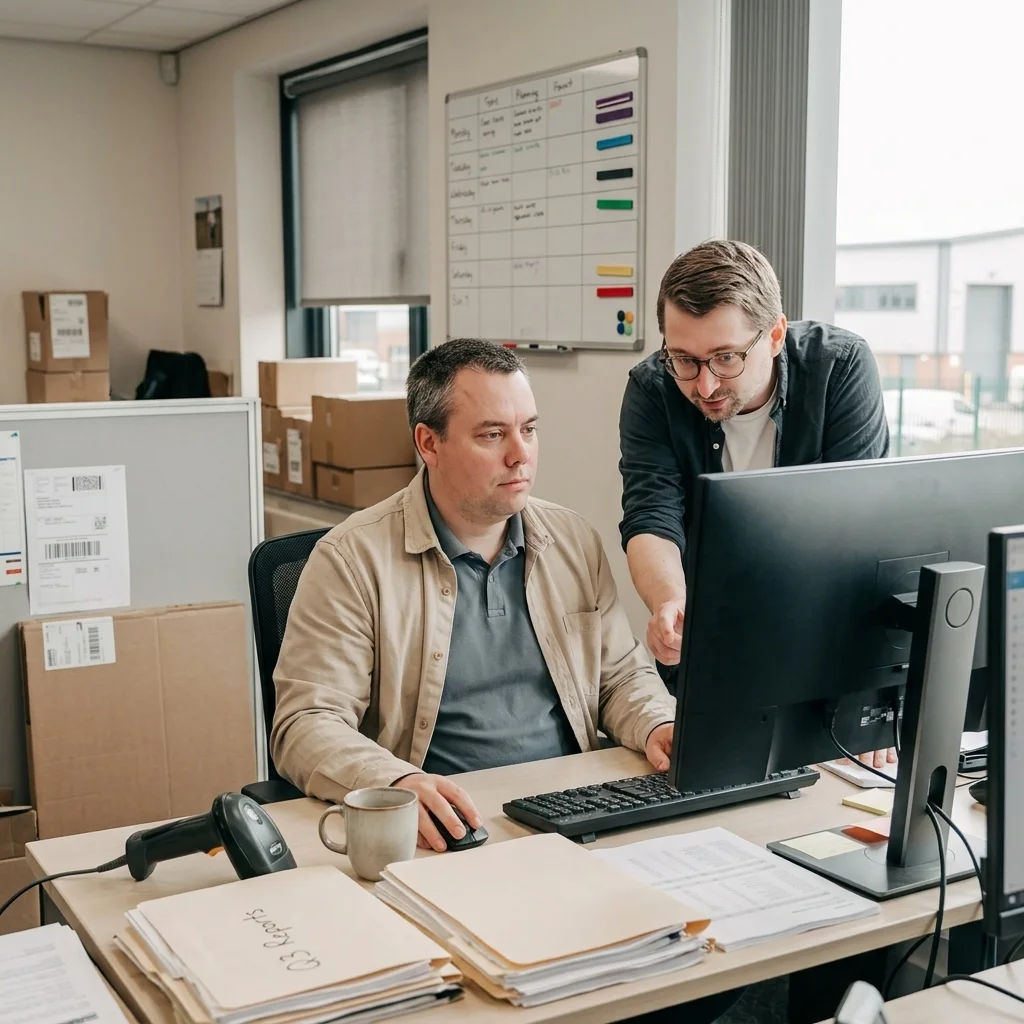
ERP software development for wholesalers with complex inventory requirements: multi-location stock, procurement optimisation, price tiers, EDI connections with suppliers and customers, and webshop integration for B2B order portals.
Manufacturing
Production planning, bills of materials, work order management and quality control. Integration with machine software and IoT sensors for real-time production data.
Professional services and projects
Time tracking, project administration, resource planning and invoicing based on actuals. Suitable for consultancies, installation companies and technical service providers.
E-commerce and retail
Integration of e-commerce platforms with inventory, procurement and accounting. Automatic order processing, returns management and omnichannel stock synchronisation.

"A deal is a deal"
Yield.inc is a new asset manager in the Netherlands that focuses on excellent customer experience, sustainability and technology. When faced with the question of whether to develop our platform in-house or with a partner, we got in touch with Spartner. We are still 100% behind the choice for Spartner because we own the source code and with Spartner, a deal really is a deal, whether it concerns the delivery date or the agreed budget!
Hans Lugtenberg Partner at Yield Inc.

"A professional software partner since 2010"
Spartner is involved and contributes in our search for innovations and always delivers top-notch work. After the first Huurda.nl version got out-dated, we collaboratively launched a completely new version in 2020.
Custom-built search engine for rental propertiesNorbert Wegter Owner of 123wonen and Expat Homes Holland

"Pragmatic and flexible collaboration"
Spartner has created a customized portal for us for the accountability of large-scale collaborative projects. This enables us and our partners to execute and account for their plans in a shared environment that is secure, transparent, and manageable. The pragmatic and flexible collaboration with Spartner has ensured that we have quickly achieved a functional and user-friendly environment.
Jurjen Terpstra Managing Partner at Wecreate Consulting

"AI and machine learning as legal tools"
In 2020, we transferred the development of Lynn to Spartner. As a result of their fast development process, the Lynn platform achieves an increasingly central role in the legal world.
Lynn, the smart AI legal robotMarco Caspers Software Development Manager at Lynn Legal

"As a business you must dare to move forward"
Innovation and change are not always welcomed with equal enthusiasm by our employees, man is a creature of habit but as a company you have to dare to move forward and the need for a contemporary drawing program for the realization of various constructions with our Masterbloc bricks was high. For us but also for Spartner, this challenge was a bit of pioneering and together we had to overcome some hurdles to arrive at a beautiful and efficient business tool. A development and learning process for both parties, in which the feedback of questions and desired adjustments by our employees to Spartner was always in good consultation and we could count on quick feedback and targeted solutions. We continue to exchange experiences with Spartner and look back and forward to a successful collaboration.
Powerful 3D construction drawing softwareBjorn Gubbels Owner of Masterbloc

"Spartner extends our capabilities and development capacity"
With weekly calls, using our Azure DevOps sprint system, Spartner actively works together with our innovation, communication and software development departments.
Multi-website CMS with Statamic 3Marco Leenders Head of Automation

"Have been using Laravel Excel for years"
We requested custom help to a performance challenge we had in our implementation of Laravel Excel. I was amazed how quickly these Laravel artisans achieved significant performance gains, which saved us a lot of development time.
Open source package for LaravelJosh Mountain Co-Founder at IncentivePilot.com

"Higher occupancy rate thanks to our user-friendly platform"
Throughout the great years that we cooperate with Spartner (previously Maatwebsite, Ed.), our software has been developed continuously. Students and landlords actively work with features like allocation, payments, chat, contract generation and more.
Custom built ERP for all student residencesMaurice Evers Head of Student Housing Department
"Innovating in the digital identification network of The Netherlands and Europe"
The pro-active approach of Spartner was crucial in understanding the complexity of the eHerkenning network.
Development of eHerkenning connection and servicesMaarten Bremer CTO / Founder Ensured
.webp)
"Innovation in legal technology"
As jurists with knowledge of IT, we highly value quality; within code, but also in process. The high work-level and trustworthiness of Spartner gives us the capacity to continuously create innovative features.
Legal tech platformNiels Winters Managing Director JuriBlox
Frequently asked questions about custom ERP
Answers to the questions we hear most about custom ERP development.
What does custom ERP software cost?
The investment depends on complexity, number of modules and required integrations. A basic custom ERP typically starts at an investment of tens of thousands of euros. In return, you pay no monthly licence fees and own the software. In a no-obligation conversation, we provide a realistic estimate for your situation.
How long does custom ERP development take?
A first working version is typically ready within 3 to 6 months. More complex projects with many integrations and modules take 6 to 12 months. We work in sprints, so you can start using working software early while we continue building.
What is the difference from standard ERP packages?
Standard packages offer a broad set of features for common processes. You adapt your workflow to the package. With custom ERP, it is the other way around: the system is built around your processes. The advantages: no unnecessary features, no per-user licence fees, and full control over functionality and data. The trade-off: a higher initial investment and dependency on the developer for modifications.
Can custom ERP integrate with our existing systems?
Yes, that is precisely one of the strong points. We build API connections with your accounting package, CRM, webshop, warehouse software and any legacy systems. EDI connections with suppliers or customers are also possible. Data flows automatically between systems.
Who maintains the system after delivery?
We provide ongoing support, maintenance and continued development after delivery. We host the system on our secure cloud infrastructure, handle updates and backups, and build new functionality when you need it.
What type of business is custom ERP suitable for?
Custom ERP is suitable for SMEs that have outgrown standard software. Typically businesses with 10 to 500 employees, unique business processes, complex integration requirements or industry-specific workflows. Think of wholesalers, manufacturers, technical service providers and e-commerce businesses with complex logistics.
What are the latest trends in ERP software?
The most important developments in ERP software are the shift to cloud-based systems, AI integration for predictive analytics and automation, mobile accessibility, and increasingly rich API ecosystems for integration with external services. At Spartner, we build these modern technologies into our custom ERP solutions as standard.