
Custom app
development.
You have an idea for a mobile app, or an existing process that needs to be faster via iOS, Android or the web. Spartner helps at every step: from concept and prototype to publication in the App Store or Google Play. On this page you will learn how our app development process works, which technology fits best and what costs to expect.
Why have an app developed?
Four benefits of a custom mobile app
Automate
Move manual processes from spreadsheets and email to a single app. Fewer errors, shorter turnaround and more room for work that actually matters.
Integrate
We connect your app directly to existing systems such as your ERP, CRM or API landscape. One source of truth, no double entry.
Scale
With cross-platform frameworks like React Native or Flutter we maintain one codebase for iOS and Android. Updates roll out simultaneously, without double development costs.
Innovate
AI components in your app detect patterns in usage and data. We translate those insights into smart features your competitors do not have yet.

App development costs in 2026
The cost of app development depends on complexity, the number of platforms and the degree of integration with existing systems. Below we outline the investment per phase, so you know upfront where your budget goes.
Concept and strategy
In this phase we validate your idea, map out the target audience and define the core functionality. Think user interviews, wireframes and a technical feasibility analysis. Investing in this phase prevents costly course corrections further down the line.
Development and integration
The build phase represents the largest share of the investment. Factors such as the number of screens, API connections, offline functionality and security determine the final cost. Through AI-assisted development we accelerate repetitive work, so our app developers focus on your business logic.
UX design and wireframing form the foundation for a user-friendly app
A prototype shows early on whether the chosen direction is right
The sharper the scope, the more predictable the follow-up budget
How do we develop your app?
From first idea to live in the App Store or Google Play: these are the steps we take together during every app development project.
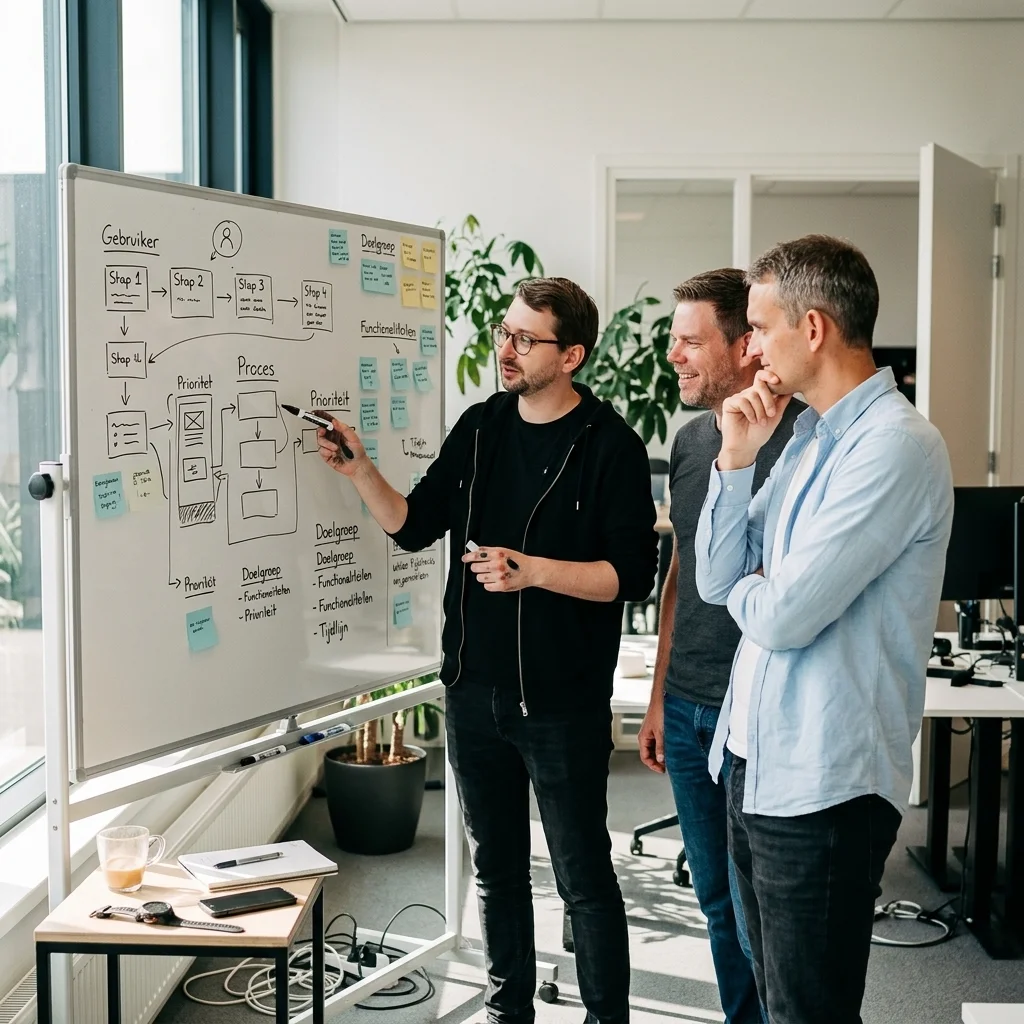

Step 1: Idea and strategy.
Before we write code, we test assumptions. Through user interviews, sketches and sometimes a paper prototype we investigate whether your target audience is actually waiting for the solution. Together we define the core functionality, the target platforms (iOS, Android, web) and the technical direction.


Step 2: Wireframe and architecture.
We translate the concept into wireframes and a clickable prototype. At the same time we choose the technical architecture: native (Swift/Kotlin), cross-platform (React Native/Flutter) or Progressive Web App. There is no holy grail, but there is a best choice for your context.
Security is co-designed from the start: OAuth2, biometric login and encrypted storage. Learn more about our approach to prototype development.
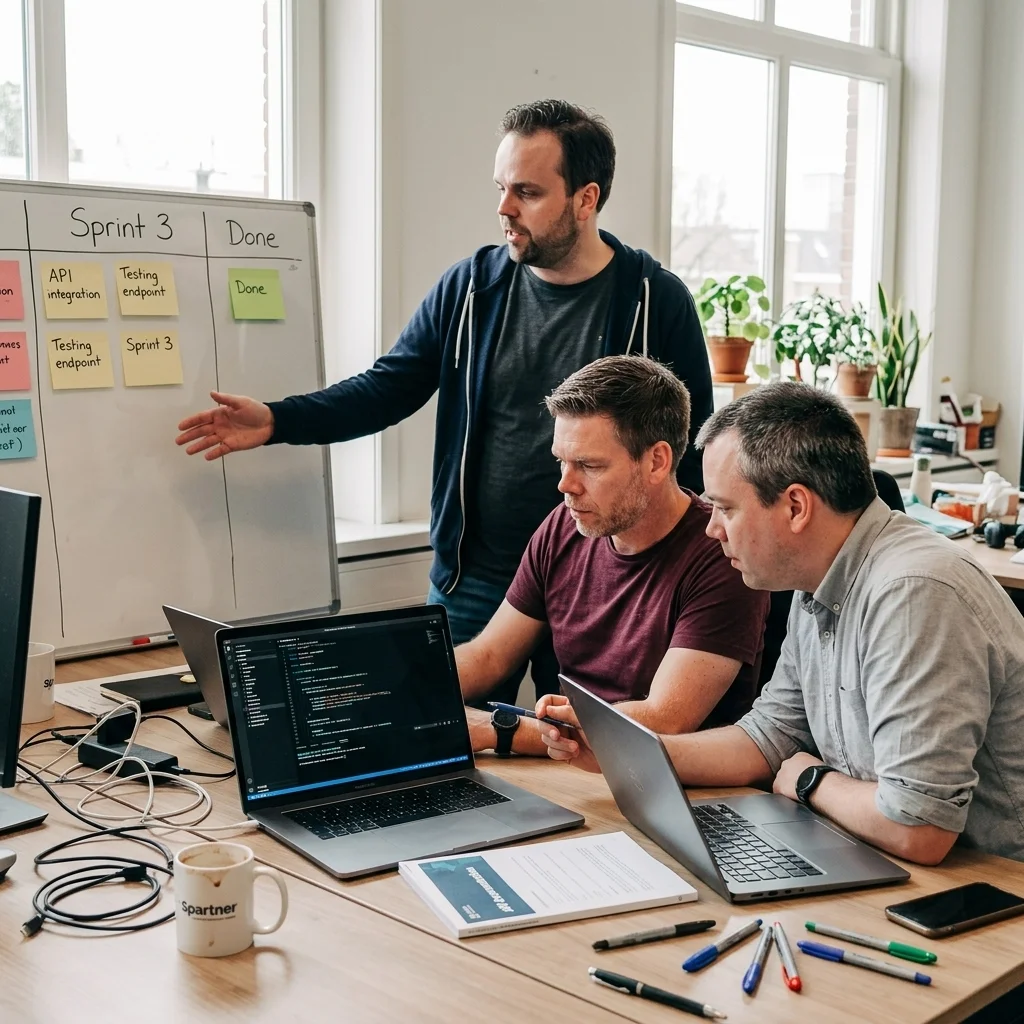

Step 3: Development and integration.
Our developers build the app in short sprints, with a working version after each iteration. We connect directly to your existing systems via API integrations. Thanks to AI-assisted coding we accelerate repetitive work, so the team focuses on business logic and user experience.


Step 4: Testing, launch and iteration.
We automate tests at multiple levels: unit, UI and end-to-end. After approval we publish to the App Store, Google Play or as a web app on a staging environment. After launch we monitor usage and performance, and iterate based on real user data.

Looking for app development?
Call or email us for a no-obligation conversation about your app idea. We discuss the possibilities, expected costs and the fastest route to the App Store. No sales pitch, just honest advice.
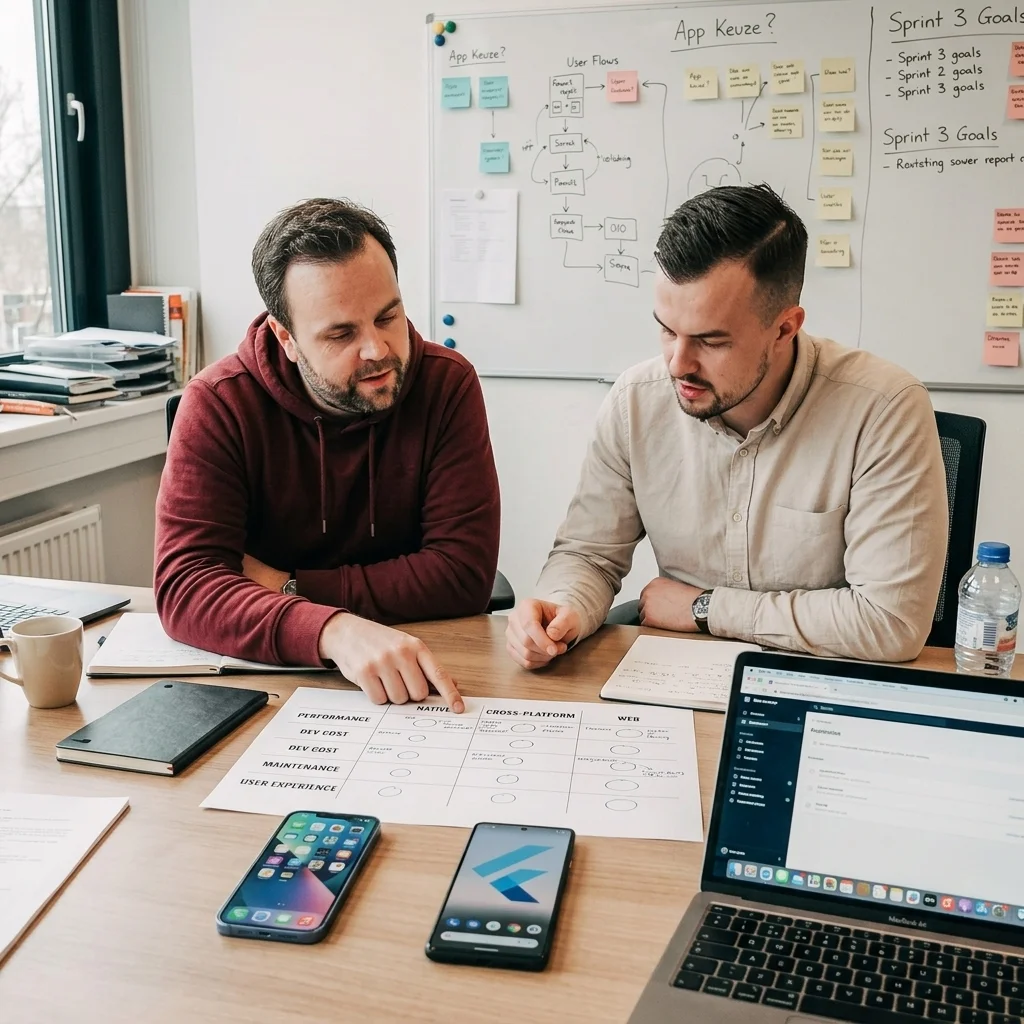
Native, cross-platform or web app?
The difference between native, cross-platform and web app
Which type of app fits best depends on your goals, budget and technical requirements. Below we compare the three options, so you can make an informed choice.
Native app (Swift or Kotlin)
A native app is built specifically for iOS (Swift) or Android (Kotlin). You can use all device capabilities: camera, sensors, offline storage and push notifications. The downside: you maintain two separate codebases, which increases app development costs.
Cross-platform and Progressive Web App
With cross-platform frameworks such as React Native or Flutter you write one codebase that runs on both iOS and Android. For most business apps this is the most cost-efficient route. A Progressive Web App (PWA) runs in the browser but feels like a native app, without installation via the App Store. Ideal when reach matters more than advanced hardware integration.

Maintenance and continued development
What happens after launch?
OS updates: Apple and Google release new versions annually. Your app needs to keep pace.
Bug fixes and performance optimisation based on real user data
New features based on user feedback and business goals
Server and hosting costs for the backend and API layer
Estimating operational costs
Expect monthly costs for hosting, monitoring and minor adjustments. For larger iterations we work in sprints, so you stay in control of the budget. Want to know more? Have a look at our software development services.
Continuous improvement with data
We integrate analytics so you can see exactly which screens perform well and where users drop off. Those insights drive the backlog for subsequent releases.
AI in app development
How AI accelerates the app development process
Build faster, focus more on quality
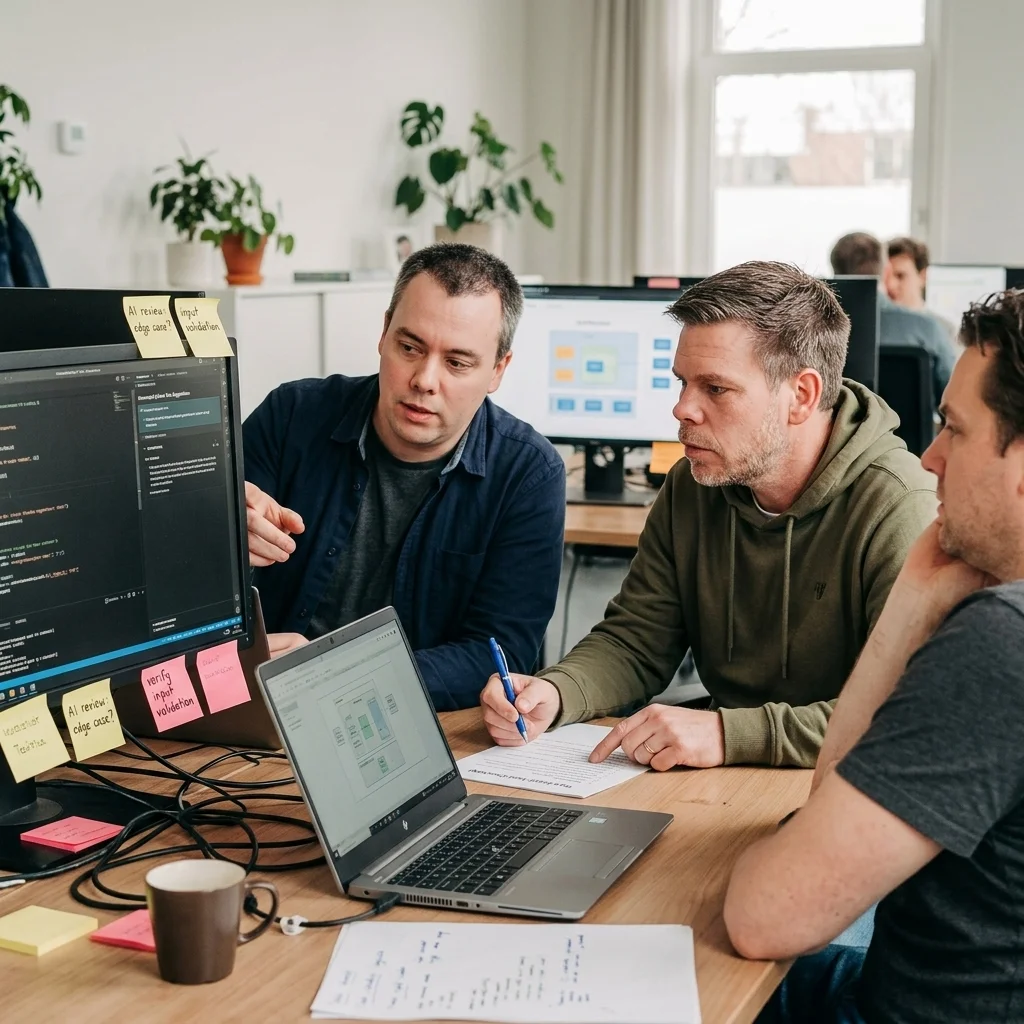
Spartner uses AI tools throughout the entire development process. Not as a replacement for our developers, but as an accelerator. Repetitive code, test generation and documentation run faster, so the team spends more time on architecture and user experience.
AI components in your app
Beyond acceleration in the build process, we integrate AI functionality into the app itself on request. Think pattern recognition, predictive analytics or smart search features. All with attention to privacy and EU data sovereignty, because sensitive data stays where you want it.
Full control over your data
For apps with AI components, transparency is essential. Through our #MIND platform you can track exactly how AI decisions are made: traceable via an Audit Trail, with roles and permissions that you define.

"A deal is a deal"
Yield.inc is a new asset manager in the Netherlands that focuses on excellent customer experience, sustainability and technology. When faced with the question of whether to develop our platform in-house or with a partner, we got in touch with Spartner. We are still 100% behind the choice for Spartner because we own the source code and with Spartner, a deal really is a deal, whether it concerns the delivery date or the agreed budget!
Hans Lugtenberg Partner at Yield Inc.

"A professional software partner since 2010"
Spartner is involved and contributes in our search for innovations and always delivers top-notch work. After the first Huurda.nl version got out-dated, we collaboratively launched a completely new version in 2020.
Custom-built search engine for rental propertiesNorbert Wegter Owner of 123wonen and Expat Homes Holland

"Pragmatic and flexible collaboration"
Spartner has created a customized portal for us for the accountability of large-scale collaborative projects. This enables us and our partners to execute and account for their plans in a shared environment that is secure, transparent, and manageable. The pragmatic and flexible collaboration with Spartner has ensured that we have quickly achieved a functional and user-friendly environment.
Jurjen Terpstra Managing Partner at Wecreate Consulting

"AI and machine learning as legal tools"
In 2020, we transferred the development of Lynn to Spartner. As a result of their fast development process, the Lynn platform achieves an increasingly central role in the legal world.
Lynn, the smart AI legal robotMarco Caspers Software Development Manager at Lynn Legal

"As a business you must dare to move forward"
Innovation and change are not always welcomed with equal enthusiasm by our employees, man is a creature of habit but as a company you have to dare to move forward and the need for a contemporary drawing program for the realization of various constructions with our Masterbloc bricks was high. For us but also for Spartner, this challenge was a bit of pioneering and together we had to overcome some hurdles to arrive at a beautiful and efficient business tool. A development and learning process for both parties, in which the feedback of questions and desired adjustments by our employees to Spartner was always in good consultation and we could count on quick feedback and targeted solutions. We continue to exchange experiences with Spartner and look back and forward to a successful collaboration.
Powerful 3D construction drawing softwareBjorn Gubbels Owner of Masterbloc

"Spartner extends our capabilities and development capacity"
With weekly calls, using our Azure DevOps sprint system, Spartner actively works together with our innovation, communication and software development departments.
Multi-website CMS with Statamic 3Marco Leenders Head of Automation

"Have been using Laravel Excel for years"
We requested custom help to a performance challenge we had in our implementation of Laravel Excel. I was amazed how quickly these Laravel artisans achieved significant performance gains, which saved us a lot of development time.
Open source package for LaravelJosh Mountain Co-Founder at IncentivePilot.com

"Higher occupancy rate thanks to our user-friendly platform"
Throughout the great years that we cooperate with Spartner (previously Maatwebsite, Ed.), our software has been developed continuously. Students and landlords actively work with features like allocation, payments, chat, contract generation and more.
Custom built ERP for all student residencesMaurice Evers Head of Student Housing Department
"Innovating in the digital identification network of The Netherlands and Europe"
The pro-active approach of Spartner was crucial in understanding the complexity of the eHerkenning network.
Development of eHerkenning connection and servicesMaarten Bremer CTO / Founder Ensured
.webp)
"Innovation in legal technology"
As jurists with knowledge of IT, we highly value quality; within code, but also in process. The high work-level and trustworthiness of Spartner gives us the capacity to continuously create innovative features.
Legal tech platformNiels Winters Managing Director JuriBlox
Frequently asked questions about app development
Answers to the questions we hear most often about custom app development, costs and the process.
How much does it cost to have an app developed?
The cost of app development depends on complexity, the number of platforms (iOS, Android, web) and the integrations required. A simple app with basic functionality requires a different investment than a complex app with offline synchronisation, AI components and connections to your ERP. We do not give standard prices, but during a free consultation we outline realistic ranges per phase: concept, design, development and launch.
How long does app development take?
A simple app can be built in a few weeks. More complex projects with multiple integrations, extensive UX and several platforms typically take a few months. We work in short sprints, so you see a working product early and can steer. The concept phase (research, wireframes, prototype) usually takes two to four weeks.
What is the difference between a native app, cross-platform app and web app?
A native app is built for one platform (iOS or Android) and uses all hardware capabilities. A cross-platform app (React Native, Flutter) shares one codebase across multiple platforms, reducing costs. A web app (or PWA) runs in the browser and requires no installation. Which option fits best depends on your target audience, budget and technical requirements.
What steps are involved in app development?
Our process consists of four phases: (1) idea and strategy, where we test assumptions and define scope, (2) wireframe and architecture, with a clickable prototype and technology choice, (3) development and integration in short sprints with direct connections to your systems, and (4) testing, launch and continued development based on user data.
Can I start with an MVP and expand later?
Absolutely, we even recommend it. With a Minimum Viable Product (MVP) you launch the core functionality quickly, gather feedback from real users and then expand in a targeted way. This keeps initial costs manageable and prevents building features nobody is waiting for.
What does app maintenance cost after launch?
After launch you will face hosting, monitoring, OS updates and bug fixes. Expect monthly costs that depend on the complexity of your app and backend. Larger iterations are planned in sprints, so you see exactly where your budget goes.
How secure is an app with AI components?
AI adds no extra risk when the basics are in place: encrypted storage, secure models and clear data flows. We use privacy-by-design as a foundation and ensure EU data sovereignty. Via an Audit Trail it is traceable how AI decisions are made.
How do I decide which features my app needs?
We start with user research and stakeholder interviews to identify which problems the app should solve. Then we prioritise features based on impact and feasibility. Start with the core (MVP) and expand based on real user data. In short sprints you provide feedback after each iteration, keeping the project aligned with your business goals.