Vergunnex. The Omgevingswet,
read address by address.

Four research agents pull the zoning plan, the Bruidsschat, the building decree and the local by-laws for a single parcel. Every conclusion ends in a decision backed by a clickable source. What cannot be substantiated does not come out.
One AI stack for the whole permit chain

The Dutch Omgevingswet replaced 26 separate acts. Anyone who wants to know whether a dormer, an extension or a shed is allowed has to assemble the answer from the zoning plan, the Bruidsschat, the building decree and the local by-laws. A homeowner gives up after half an hour. A permit officer spends four to eight hours per case.

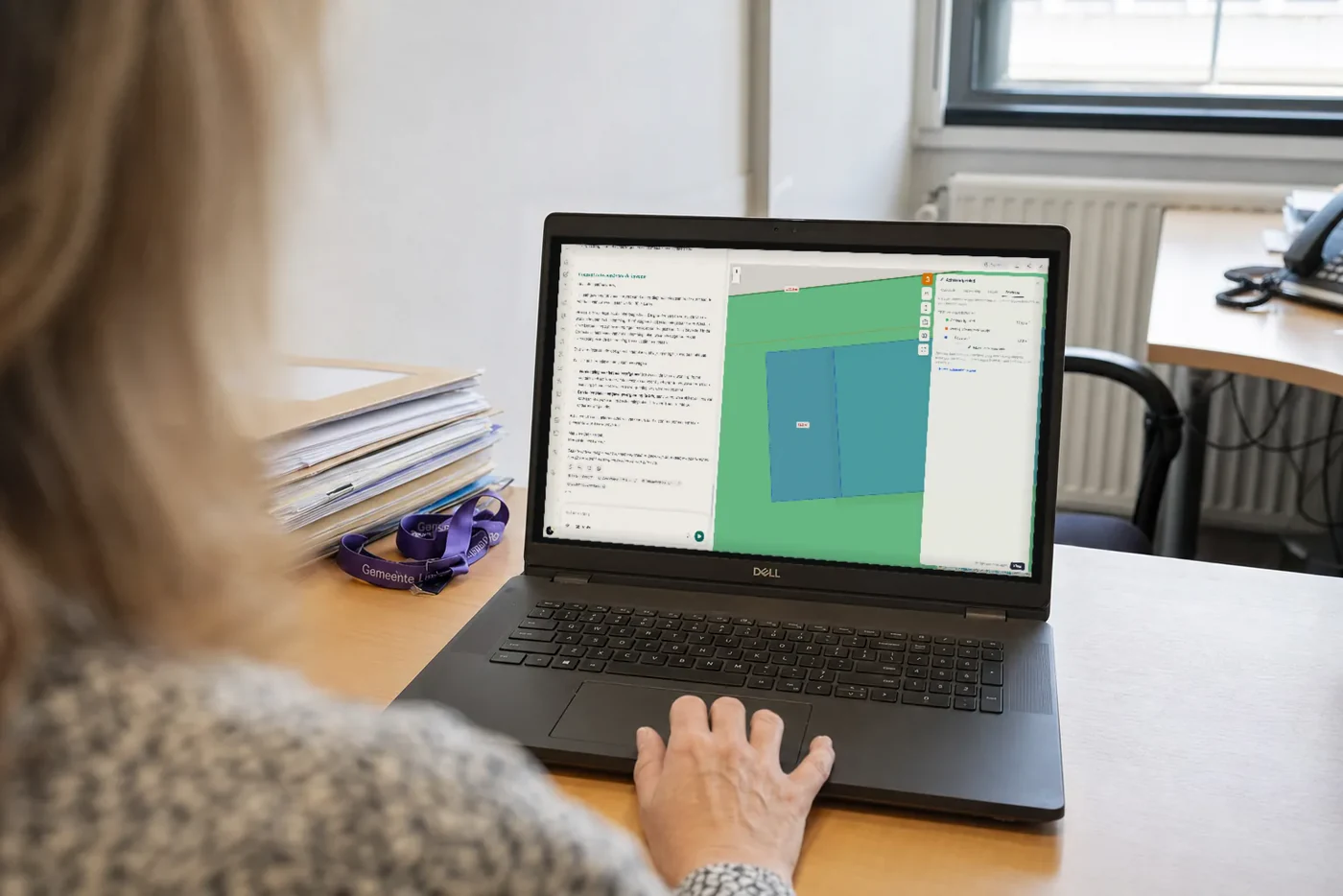
Vergunnex turns that around. You type an address and a question. The platform resolves the address to the parcel through BAG, PDOK and the land registry, retrieves the legal sources and walks the statutory order: the Bruidsschat first, then article 22.27, then 22.36, then the zoning plan. The same fixed route is then followed through the building decree. Not the order the model finds convenient, but the order the law prescribes.

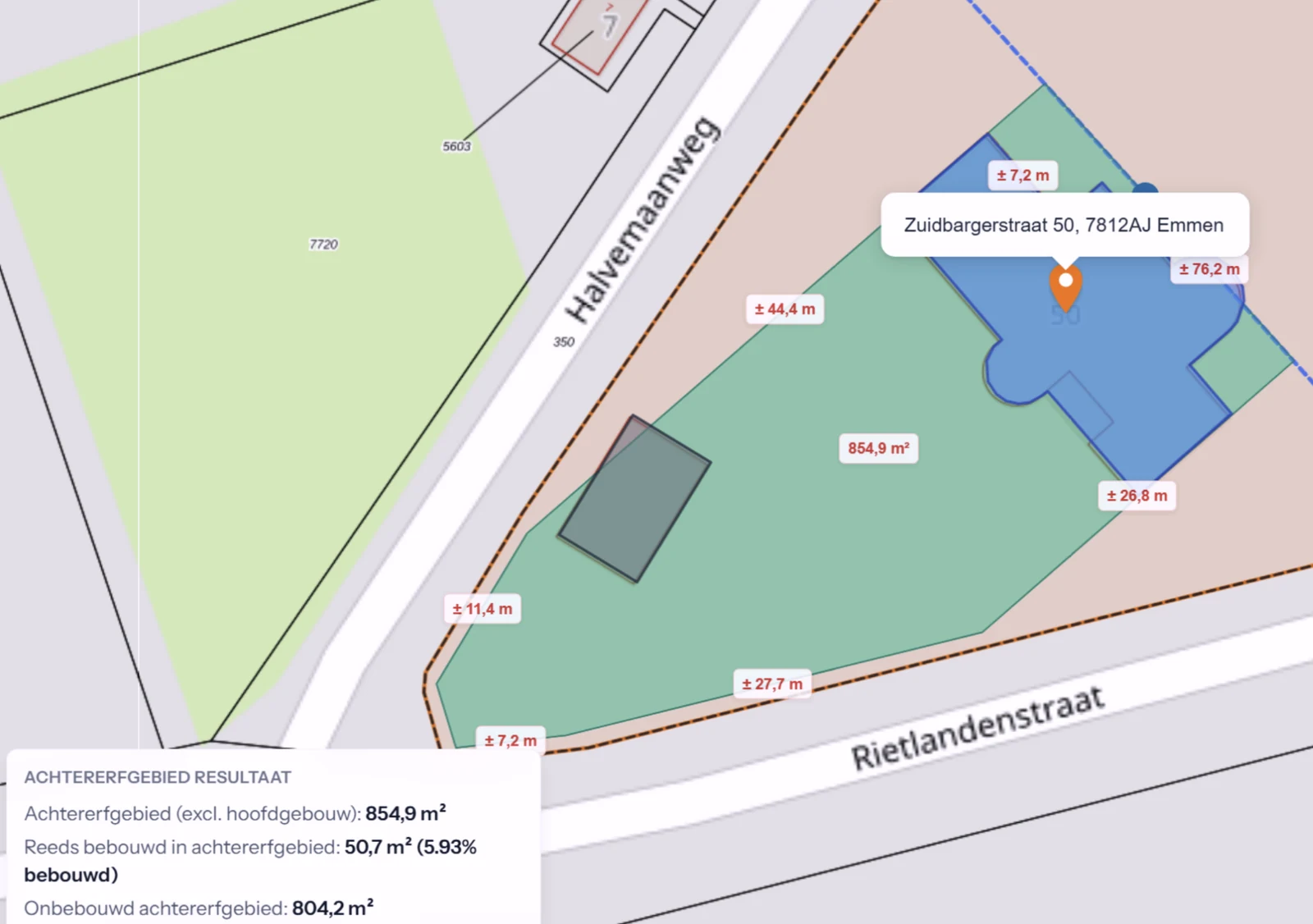
On the map the platform measures the rear garden area, the distances to the parcel boundaries and the surface already built on. Those results feed into the legal assessment as facts, so the conclusion is about this parcel rather than an average one.

Year
2026
Technology

- Laravel
- Filament
- Livewire
- LLM integration (OpenAI)
- RAG with Pinecone
- Kadaster, PDOK and BAG
- Microsoft Graph and Gmail API
- Leaflet and Three.js
- Horizon
- Reverb

What changed since

This application was built by hand. Its upkeep no longer is.

We have been building software since 2004, and much of it is still running. What changed is the pace at which it can be looked after and extended.

Maintenance
Then A batch of updates, once a quarter.
Now Watched continuously instead of at fixed moments.
Spotting problems
Then Someone had to notice it first.
Now An agent checks for errors and outdated packages, and what it finds becomes a task.
Changes
Then A quote, and a place in the next sprint.
Now Asked for in the chat, on this application, with an architect checking before it goes live.
How the Code Agent works on existing software

"I do not have to believe the answer, I can check it."

We review every case ourselves. If the tool picks the wrong article of the zoning plan for an address, I report it with the address and the article, and I see it fixed in a next version. That is the heart of it for me: I do not have to believe the answer, I can check it against the source, step by step.

AI platform for Dutch environmental law - Vergunnex

Julia Lindner Integrated Permits Officer, municipality of Peel en Maas

"Test the pilot internally first, only then scale up."

We started with a bounded pilot on real cases and reviewed the results internally before deciding on any rollout. The condition throughout was that our officers can read back the reasoning for each case. Advice you cannot explain to an appeals committee is of no value to us.

AI platform for Dutch environmental law - Vergunnex

Erik Geurts Municipality of Peel en Maas

A source,
or no answer.

The whole architecture is built around one rule: every fact gets a citation to wetten.overheid.nl, IMRO or AKN, and that citation is clickable in the answer. No source, no statement. A conversation also stays with one location or postcode, so rules from one parcel never end up in the conclusion for another. And every answer ends in a decision: permit-free, allowed, prohibited, conditional or permit required. No hedging.

For municipalities that researcher sits in the mailbox. An incoming question is researched automatically and parked as a draft in Outlook, Microsoft 365 or Gmail. The officer reads, reviews and sends. Nothing leaves the organisation that a person has not read. For developers and architects we connect their own archive: SharePoint, OneDrive or Google Drive is synchronised and vectorised, so years of project files can be queried alongside current legislation.

In its pilots Vergunnex measures a four times shorter research lead time at municipalities and four days less site research per plot at developers.

Software that shows its sources.

AI only becomes usable in legal work when the architecture enforces three things: show the sources, follow the statutory order, and let people decide. Vergunnex is built on exactly those three principles, in a multi-tenant setup where every customer keeps their own knowledge base and audit log. That is the difference between a tool people want to use and a tool their manager will never approve. Want this kind of substantiated AI in your own domain? We are happy to think along.

What would you change first?

Enter your web address and say what needs to change. You see it on your own site before you decide anything.

No account needed. You see a first result within a minute.

We have received your message. We will contact you shortly. Something went wrong sending your message. Please check all the fields.