AI for the policy cycle,
that works for municipalities.
Municipalities work with fragmented sources, legal nuance and constantly changing regulations. With  Spartner MIND, you make the policy cycle concrete, traceable and executable, from interpretation to decision, without losing control.
Less searching, more certainty.
From open government data to actionable decisions, in your context.
Understand
Rules from environmental plans, the Building Structures (Living Environment) Decree and local regulations finally become readable. Not "simple," but understandable, including source references and context per case.
Monitor
Dashboards collect signals from Overheid.nl and case law, and turn them into a clear overview. What we notice is that teams only then see which trends are truly emerging, by area or theme.
Shape
Project information, participation input and recurring citizen questions become one story. That lets you shape policy around what people actually experience, instead of isolated incidents.
Execute
Permits and question flows are handled faster because #MIND prepares legal substantiation, quotations and links to original sources. But you stay in control, because everything remains traceable.

See the policy cycle as a traffic control center.
In a traffic control center, you do not want disconnected camera feeds; you want an overview with context, alerts and decision space. Solutions for the policy cycle work the same way: you bring data together, interpret it, and intervene in time, with evidence.
#MIND turns knowledge into action, not just search results.
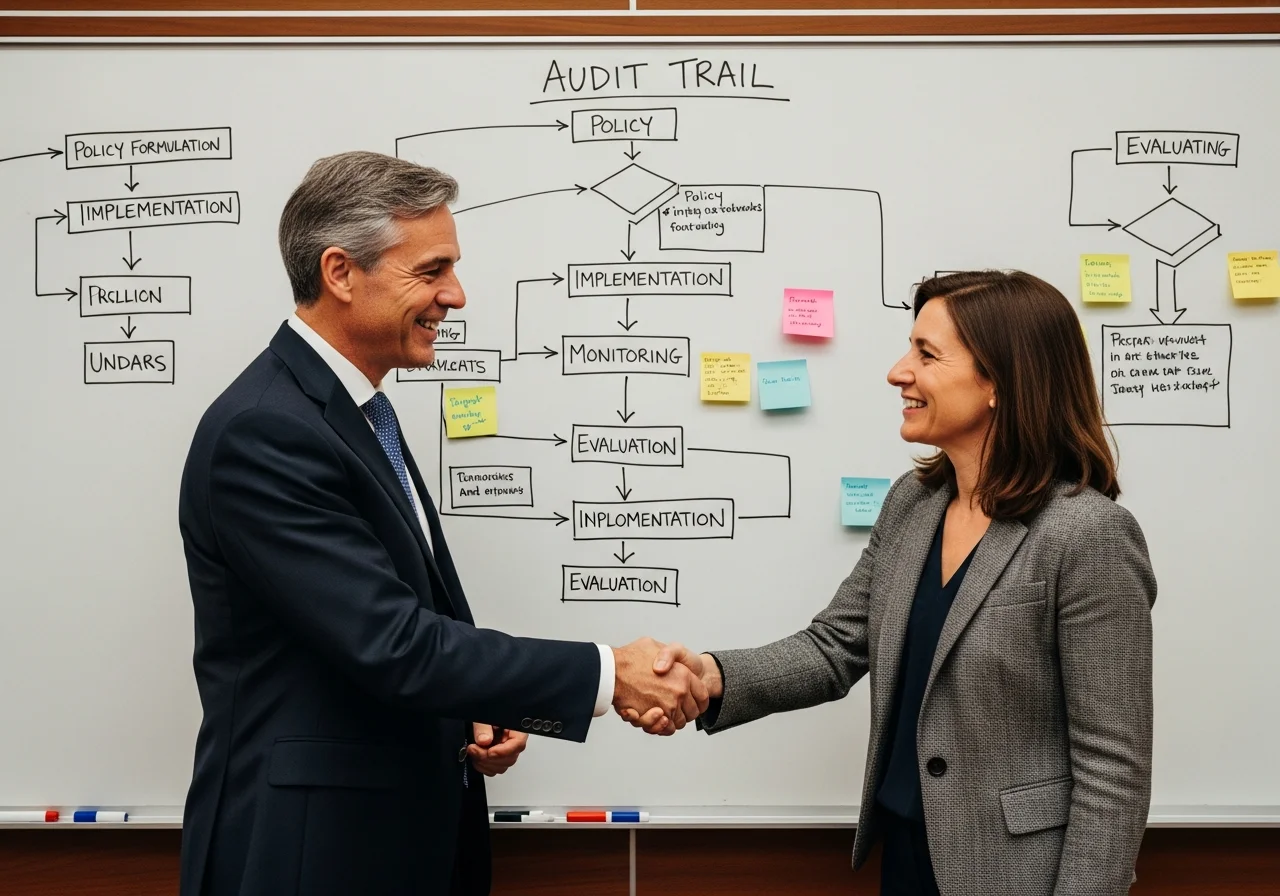
Many organizations have "information," but no working memory. #MIND takes static documents, metadata and source structures and turns them into an organizational brain that helps steer policy, monitoring and execution, with Audit Trail so you can review how a conclusion was reached.
And it remains your system, your rules.
With data sovereignty within the EU, metadata intelligence (not just plain text), and a Skill Builder that lets you encode your own business logic, you avoid the familiar black-box frustration.
Clear explanations of complex regulations, by role and situation
Monitoring that surfaces trends and exceptions (without someone manually reading everything)
Policy shaping that learns from questions, participation and real-world documents
Tools that make fragmented plans scannable, including definitions and terms
Execution with legally substantiated draft answers, plus control through Audit Trail
Roadmap: from source to organization-wide embedding
What we notice is that AI in government only becomes truly valuable when teams build feedback loops. Follow these five steps.
-

Step 1: connect the sources you already have
Do not start with yet another portal; start with what you already use. Connect SharePoint, email and where needed ERP or case systems, and add public sources that are crucial for the policy cycle, such as DSO-related datasets and publications via Overheid.nl. In practice this requires clear boundaries: which teams see what, which documents are leading, and where sensitive data sits (which you therefore anonymize).
-

Step 2: digitize legal and policy logic
Then you define how your organization reasons. Which definitions does the municipality use for "ancillary structure"? Which exceptions apply in a specific area? Which policy rules carry weight, and which are informative? This step can feel heavy, but it creates clarity, because #MIND can then reason consistently based on your own quality standard.
Create an initial set of Skills, such as "legal substantiation," "explain terms" and "source reference required"
Add a data-anonymization Skill for safe case processing
Agree on how quotations, links and context should appear in output
-

Step 3: activate role-based applications
Not everyone needs the same thing. A citizen wants plain language. A policy advisor wants nuance. A legal specialist wants sources and consistency. That is why role-based chatbots and dashboards work so well: each channel gets its own function, with the same underlying truth and the same Audit Trail.
-

Step 4: measure, improve and anchor
Which answers were useful? Which questions came back? Which rulings or publications changed interpretation? You feed those insights into Skills and the knowledge base, so quality improves without starting over every time.
-

Step 5: scale from project to organization
Start with one area, one environmental plan or one permit flow. Then scale to other areas, themes or teams without rebuilding custom software every time. Through the Skill library, impact grows organically, and that usually works best in public-sector environments.

Do you want to make the policy cycle workable?
It can be frustrating when everyone works hard but the overview is missing and discussions get stuck in "where exactly is that stated?". So let us make it concrete, with your sources, your processes and your legal reality. Experience the transparency: see the Audit Trail in action. Connect your SharePoint or ERP and activate your data, so solutions for the policy cycle become a working routine instead of just a plan.
Understand regulations, without interpretation noise.
From public sources to understandable, case-specific explanations with verifiable provenance.
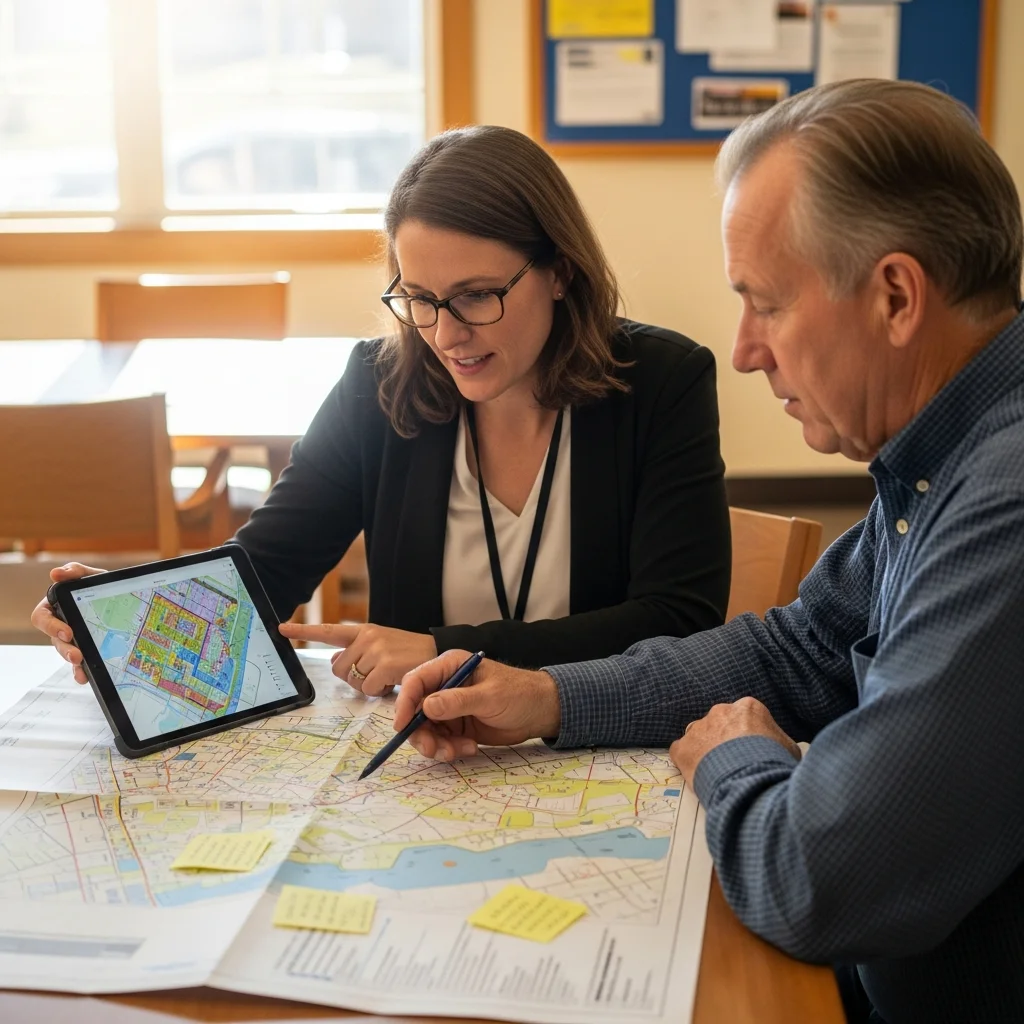
Everyone says information is "public", but public does not mean accessible. A property developer who wants to know whether a roof extension is possible, a resident who wants to place something in a garden, or a policy officer looking for an exception often get stuck at the same point: too much text, too many references, too many layers.
And under the Environment and Planning Act that has not become any simpler. There are environmental plans, local regulations, applicable rules, map layers, definitions and then the day-to-day permit process on top. That is why solutions for the policy cycle start with understanding, because if you cannot explain the rules, you cannot apply them properly.
Role-based chatbots that put information "in context".
Spartner sees that one generic chatbot almost always disappoints. Not because AI cannot do it, but because the questioner has a role, and that role determines the nuance required. That is why role variants work better in practice, for example:
Environmental Plan chat.
It helps users understand information from environmental plans. Not by guessing, but by dynamically retrieving relevant passages, including map context. A key detail: #MIND can fetch more data live and build the dataset on the fly, so answers grow with the question instead of being limited to one static export.
Building Rules chat.
This one is trained on the Building Structures (Living Environment) Decree and makes that information manageable. No endless articles, just plain-language explanations with references that teams can rely on internally.
Local Rules chat.
This keeps users informed about what is happening in a postal-code area, and lets them keep asking until they get to the core. What we notice is that this is exactly what citizens expect: a conversation, not a search engine.
And then the technology that makes it reliable.
#MIND does not run on "plain text", but on metadata intelligence. That sounds abstract, but the effect is concrete: documents stay linked to origin, date, context and structure. And via the Audit Trail you can review which steps the AI took, which sources were used and why something was considered relevant. In municipal environments that is not a luxury, it is the foundation.

Monitor what is really happening in your municipality.
Signals from official publications and case law become policy triggers, not isolated coincidences.
Making policy without monitoring feels like steering with your eyes closed. You know "a lot" is happening, but you only see late where things are shifting, for example when rulings arrive, when a series of publications appears, or when one theme suddenly returns in multiple files.
But monitoring is difficult because sources are scattered. #MIND has a smart AI-driven monitor with all data from your municipality.

"A deal is a deal"
Yield.inc is a new asset manager in the Netherlands that focuses on excellent customer experience, sustainability and technology. When faced with the question of whether to develop our platform in-house or with a partner, we got in touch with Spartner. We are still 100% behind the choice for Spartner because we own the source code and with Spartner, a deal really is a deal, whether it concerns the delivery date or the agreed budget!
Hans Lugtenberg Partner at Yield Inc.

"A professional software partner since 2010"
Spartner is involved and contributes in our search for innovations and always delivers top-notch work. After the first Huurda.nl version got out-dated, we collaboratively launched a completely new version in 2020.
Custom-built search engine for rental propertiesNorbert Wegter Owner of 123wonen and Expat Homes Holland

"Pragmatic and flexible collaboration"
Spartner has created a customized portal for us for the accountability of large-scale collaborative projects. This enables us and our partners to execute and account for their plans in a shared environment that is secure, transparent, and manageable. The pragmatic and flexible collaboration with Spartner has ensured that we have quickly achieved a functional and user-friendly environment.
Jurjen Terpstra Managing Partner at Wecreate Consulting

"AI and machine learning as legal tools"
In 2020, we transferred the development of Lynn to Spartner. As a result of their fast development process, the Lynn platform achieves an increasingly central role in the legal world.
Lynn, the smart AI legal robotMarco Caspers Software Development Manager at Lynn Legal

"As a business you must dare to move forward"
Innovation and change are not always welcomed with equal enthusiasm by our employees, man is a creature of habit but as a company you have to dare to move forward and the need for a contemporary drawing program for the realization of various constructions with our Masterbloc bricks was high. For us but also for Spartner, this challenge was a bit of pioneering and together we had to overcome some hurdles to arrive at a beautiful and efficient business tool. A development and learning process for both parties, in which the feedback of questions and desired adjustments by our employees to Spartner was always in good consultation and we could count on quick feedback and targeted solutions. We continue to exchange experiences with Spartner and look back and forward to a successful collaboration.
Powerful 3D construction drawing softwareBjorn Gubbels Owner of Masterbloc

"Spartner extends our capabilities and development capacity"
With weekly calls, using our Azure DevOps sprint system, Spartner actively works together with our innovation, communication and software development departments.
Multi-website CMS with Statamic 3Marco Leenders Head of Automation

"Have been using Laravel Excel for years"
We requested custom help to a performance challenge we had in our implementation of Laravel Excel. I was amazed how quickly these Laravel artisans achieved significant performance gains, which saved us a lot of development time.
Open source package for LaravelJosh Mountain Co-Founder at IncentivePilot.com

"Higher occupancy rate thanks to our user-friendly platform"
Throughout the great years that we cooperate with Spartner (previously Maatwebsite, Ed.), our software has been developed continuously. Students and landlords actively work with features like allocation, payments, chat, contract generation and more.
Custom built ERP for all student residencesMaurice Evers Head of Student Housing Department

"Innovating in the digital identification network of The Netherlands and Europe"
The pro-active approach of Spartner was crucial in understanding the complexity of the eHerkenning network.
Development of eHerkenning connection and servicesMaarten Bremer CTO / Founder Ensured

"Innovation in legal technology"
As jurists with knowledge of IT, we highly value quality; within code, but also in process. The high work-level and trustworthiness of Spartner gives us the capacity to continuously create innovative features.
Legal tech platformNiels Winters Managing Director JuriBlox
Do solutions for the policy cycle still work when our data is scattered?
Yes, and honestly that is usually the starting point. Municipalities have information in SharePoint, mailboxes and case systems, plus public sources such as Overheid.nl and DSO services. #MIND starts by connecting and structuring everything, then builds a knowledge layer that absorbs that fragmentation so users no longer need to know "where" something is stored.
How does #MIND prevent AI from making things up?
The core is that #MIND does not just talk: it links sources and makes reasoning visible. Through the Audit Trail, you can see which steps were taken and which source passages were used. And by enforcing Skills such as "always quote and link," you steer output toward verifiability, which is crucial in legal and policy contexts.
Can we truly reuse DSO information and environmental documents in our own applications?
Yes. The DSO is set up as an open system and can be connected through APIs, with services available through the developer portal. In practice, that means you can display, combine or use open data in your own systems, depending on confidentiality and access conditions such as API keys and fair use.
What is the difference between an environmental-plan chat and a "regular" AI chat?
A regular chat often lacks context and structure. An environmental-plan chat works with a dynamic dataset, relevant map layers and source selection matched to location and activity, so answers are not only plausible but traceable. And because #MIND understands metadata, links to version, origin and area of applicability stay intact.
Does this also help convert legacy plan rules into one environmental plan?
#MIND can help by scanning environmental plans, exposing differences in definitions and clarifying terms consistently. In practice, a glossary is often the first breakthrough, because discussions about meaning otherwise become endless. From there, you can move toward greater coherence and standardization.
Can we monitor policy by area, for example a project zone?
Yes. You can define a specific area and focus monitoring on it, so publications, relevant regulations and case law come together in one overview. That helps project teams and policy advisors see changes faster, and most importantly, why those changes matter for that area.
Is this useful for permit handling, or does it stay at analysis?
It is specifically useful in execution. Think of a permit chatbot that answers questions with quotations from laws and regulations, plus links to original sources. For email or service desk, #MIND can prepare draft answers and substantiation, while a staff member makes the final decision.
What about privacy and data handling within government?
#MIND is designed with EU data sovereignty and anonymization as part of the workflow. That means sensitive data can be shielded before processing, and strict access rights can be enforced per team, source and use case.
What does a Skill Builder deliver in concrete terms?
Consistency. You define how your organization writes, analyzes and substantiates, and enforce that standard in every output. That gives less variation between teams, fewer "personal interpretations" in texts, and calmer review rounds because everyone works from the same structure.
